
Click here to listen to the interview on Spotify.
Hlumela Luvuno: Hello.
Patience Nitumwesiga: Hello?
Hlumela Luvuno: How are you?
Patience Nitumwesiga: Hello, hello!
Hlumela Luvuno: Hi!
Patience Nitumwesiga: How are you doing?
Hlumela Luvuno: I’m okay, how are you?
Patience Nitumwesiga: Uh, I’m actually not feeling well, so that’s why my camera is off, um, uh, yeah.
Hlumela Luvuno: Oh, I see. Oh, okay.
Patience Nitumwesiga: But my… my… my other producer is here as well. You can say hi. He’s, um… yeah.
Hlumela Luvuno: Hi!
Patience Nitumwesiga: Hi, my name is Phil.
Hlumela Luvuno: Hi, Phil. Very nice to meet you, too. OK. All right. So we only have about 30 minutes for the session. So I’m going to try and make it a bit of fun and a little bit more quicker.
Patience Nitumwesiga: Nice to meet you.
Hlumela Luvuno: So Patience can heal and get much better.
Patience Nitumwesiga: No worries, no worries.
Hlumela Luvuno: Okay, so if it’s okay, I’m gonna record the session, if that’s fine.
Patience Nitumwesiga: Thank you.
Patience Nitumwesiga: Yeah, that’s okay. Sure
Hlumela Luvuno: Okay, awesome. I’ll just press record. All right. So hi, Patience and Phil. My name is Hlumela from the Talent Press Class of 2026. And I’m very much excited to be here and to host the session. And to interview you. So before we dive into the documentary, I would love for the audience to know the people behind it. So could you please introduce yourselves and tell us a little bit about Patience and Phil? And both as filmmakers as well as individuals.
Phil Wilmont: Okay, I’ll go first. Uh, Phil Wilmot is my name. I came into this project a few years in an official capacity, but I’ve been close to Stella and to patients for many, many years before even the project started. This is a story that must be told, and hopefully I can make a contribution so that it sees the light of day. Yeah, I think it’s just been to support Patience and her journey with making the film. Um, okay, so my name is Patience Nitumoifiga, I’m a filmmaker from Uganda. I, um, I actually went to Tallins-Durban in 2019, so I’m excited to be talking to you, because I really loved Talents. It was an awesome space. Um, yeah, I guess that’s it.
Hlumela Luvuno: Thank you so much for that. So every documentary begins with a moment of curiosity. So what was it about Dr. Stella that captured your attention? Do you have a relationship with her?
Patience Nitumwesiga: Yes.
Hlumela Luvuno: Or was there a specific moment or an encounter that made you feel connected to her journey?
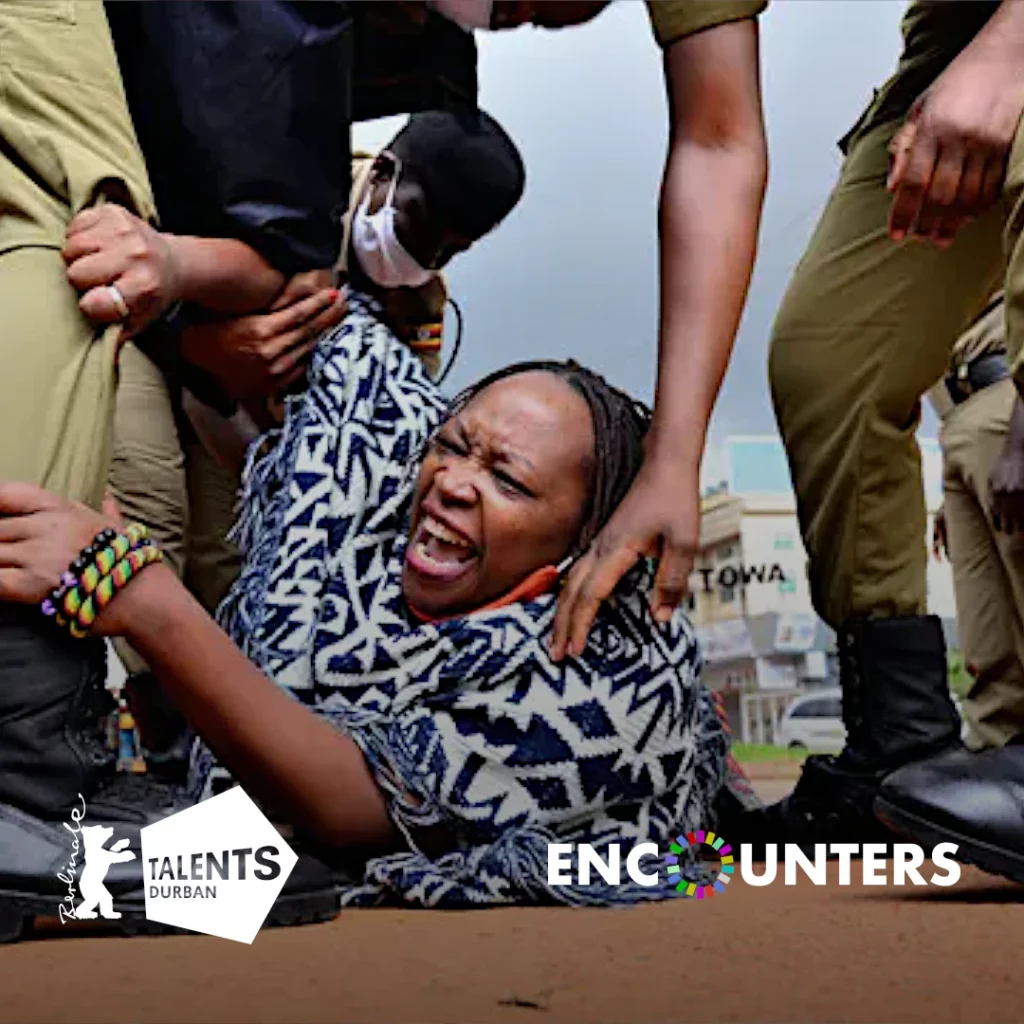
Patience Nitumwesiga: Yeah, it’s a bit of both for me. I had met Stella before on the streets. We participated in a women’s march together in 2018, protesting femicide, and I saw a side of her that I hadn’t seen on the news and the media. The media were always portraying her as this very. um… attention-seeking activists, because I think they think a lot of activists just want attention. And I remember meeting her and seeing how collaborative and how… deeply friendly and, you know, collaborative she was. So we got connected then, and then she went to jail soon after that. And my partner was visiting her in jail, I was sending her books and stuff.Um, because she was in there for 18 months. And then, when she came out of jail, after having been tortured, a lot of things happened to her. She was visiting people who had visited her in jail, so she came to our home as well. Um, and I think in that moment, for me, that’s when I was like, this story needs to be told, because she looked very frail, she did look like she was going to die, they had poisoned her, they had tortured her. And I felt like it would be sad if we lost her, and we didn’t have, like, a proper intimate, um, knowledge of who this woman was. So for me, it was that selfish need, in a way, to capture a little bit of her energy. Um, and her soul. Um, and then, luckily, she said yes when I asked, and… and that’s how the story started, yeah.
Hlumela Luvuno: Wow. Okay. So I have to ask about the title. It’s such a striking image, The Woman Who Poked the Leopard. It immediately sparks curiosity. So how did the title come about?
Patience Nitumwesiga: Um, so one, I like African titles. I’m very influenced by folklore, and I like, you know, like, folk tales, and how they’re always about these mysterious figures, even though they’re critiquing, like, everyday issues in society. But secondly, so the… there’s a lot of stuff that has happened in Uganda where she is seen as having poked the leopard’s anus, and the president has referred to himself as the leopard, and said there are consequences for people who poke the leopard. Um, and I think, you know, there’s been, like, cartoons as well, if you check online, about horror and, uh, you know, on, on, like, the back of a leopard, um, and stuff like that. So I really liked that imagery. Um, I like the… the symbols, the very… you know, because she is, like, somebody that really goes for… that speaks truth to power, and… and she does so, so courageously. So, you know, for me, the… the African, the very traditional imagery works, and also because she uses traditional methods of… protesting. She’s a very pre-colonial knowledge creator, and I found that very interesting, and I thought the title fit that best, yeah.
Hlumela Luvuno: Wow, that’s incredible. You know, one thing that really comes across in the documentary is the intimacy of access that the crew was given.How did you manage to build trust with Dr. Stella and her family, especially during such a vulnerable time in their lives?
Patience Nitumwesiga: Um, yeah, I mean, we… I think I was just lucky to have been… to have known her before, and to also have been Ugandan, because I think a lot of documentaries have a lot of extractivism. Like, people come to different communities that they’re not part of, and they want to tell the story and leave. And I think part of why Stella trusted me is that she knew we were both Ugandans, we were both, um, in trouble if police came to arrest us, you know, we were both, you know, um, not protected. So, I think a lot of that. But also, like, the solidarity of knowing we were both in the women’s movement in Uganda, and we had known each other before, you know, all that happened. And maybe also the trauma bonding of just being on a, you know, filming together and being in very precarious situations together, I think it bonds you in some way, and I think for all those years that we were doing this together, we were, you know, together in it. I was not, you know, like a distant, observing filmmaker, I was also in, you know… I wasn’t doing the stuff she was doing, I was just, like, a witness, um, of course. Um, but I think, in a way, she did feel my solidarity and… and sisterhood. Um, and when it comes to her kids, she did tell me that she was giving me permission because she knew me and trusted me. Um, but she wanted the kids to have a say and have their own right to refuse or accept to be in the film. And she did leave the room the time that I asked for their permission, so I talked to the kids. I think I was just honest, I was like, you know, I’m here, I want to make a film about you guys as a family, and how your mom’s work affects you, but if you don’t want me in some spaces.I am okay leaving. And they did see that I meant it when they, you know, decided they didn’t want me to film something. I went out, you know, I didn’t come, I didn’t force, I didn’t try to coerce them, or to seduce the idea of, you know, this would be nice. No, what instead happens is, like, we… we all developed this, you know, trust together that they know that my camera is also something they can use to, you know, to talk about their lives and their struggles. So I think it was partly, um that previous knowledge and also the sisterhood, but also a large part of it was being in it together and going through all of that, um, yeah. Uh, if I could add, um.
Hlumela Luvuno: Yes.
Patience Nitumwesiga: Often people are very surprised that we have this access, that patients have this access with Stella. I’m a little bit surprised that they’re surprised sometimes. I think the reason I’m surprised that they’re surprised is that.
Hlumela Luvuno: Thank you.
Patience Nitumwesiga: often filmmakers see themselves as very external to whatever the subject is they’re focusing on. Um… They are shooting from afar, from outside, and often that is the case. Um, but I think one… one reason that this film is quite unique is that, um, the crew…is immersed in the realities of Stella’s family. And has been long before, by virtue of being part of the struggle against the Museveni dictatorship, and generally just, you know, by being Ugandan feminist women, by, uh, you know, taking action in community for years prior, together, before making the film. So, uh… much as Nitu might have went into this project thinking that, you know.uh… her voice and likeness, et cetera, won’t show up in the film at all. At some point, it became disingenuine. If she was to erase herself or to erase the camera.So it comes across as direct cinema because of the relationships between cinema and film the crew and Stella and her family. And,so, so, so that gives kind of, like, a unique lens to the film, but it, it also, um… Makes me…Question…The…in broad terms, the relationship between the film industry and the subjects they cover. Of course, not every filmmaker will always be completely immersed in the subject that they are.you know, filming about. Um… But, uh…It’s, it’s, uh, it’s, it’s sadly rare that…Um that closeness of relationship between the filmmaker and the topics and people that they are shooting is not actually as intimate as it could be.
Hlumela Luvuno: Absolutely, absolutely. And I’m glad that you’re mentioning that as well as her children, because one of the aspects that really stayed with me long after watching. The documentary was Dr. Stella’s children and their perspectives and how their perspectives add so much emotional depth. So why was it important to also include and to tell their story from their eyes as well.
Patience Nitumwesiga: Um, I think there’s many reasons why, but part of, you know, why I thought, you know, that would be, like, important is that I also didn’t want to make a film about Stella being an activist in a vacuum. I did want the audience to know that she’s human. And she has a family, and also because I’ve seen a lot of films, especially about, um, say, activist men, and they have wives at home who stay with their kids, so they’re allowed to go and do whatever they want. But I wanted to explore the idea of what happens to an activist woman, uh, who doesn’t have a wife at home to leave, you know, the kids with, and she’s a single mother as well, so I think for me that was important from the start, but then when we started filming, I also grew really close to the.
Hlumela Luvuno: Thank you.
Patience Nitumwesiga: to the kids. And I think it was important to me that their voice also comes through. What do they want? We want Stella to stand up for us, yes, but they want a mother who stays at home with them. And I think for me, the way the film ends, the way that it does because Taylor listens in the end to her children, and I think sometimes we don’t give activists that grace to say they have a right to also step out a little bit, to step back and do what their families want. So for me, the kids were…you know, these forces behind her humanity of, you know, who she is beyond just the activists. She’s not just a tool for, you know, um, us to say, you know, um, give the F, um… Submit a finger to the…government, she’s also a person, you know? Yeah.
Hlumela Luvuno: Now, Phil, in terms of documentary filmmaking, I know that that means, um, living with far more footage, um, that one can ever make into the film.When you reached the editing room, how did you decide what belonged into the story and what needed to be left out?
Patience Nitumwesiga: Uh, well, we entrust those decisions to Nitu, um… I think, you know, as a team of producers, uh…it was easy. She’s good at what she does, and she had a particular perspective, she had a particular…you know, story coming together that she wanted to tell. And, um, we had no reason to, you know.
Hlumela Luvuno: Hmm.
Patience Nitumwesiga: interfere with that process, you know? That’s her craft. But, uh, but what I can say is that, you know, this is the product of years and years of, um…You know, gathering footage and, um…Shooting everything possible, uh, also looking for archive, you know? And, uh, there was a lot to dig through, and it wasn’t easy because, um…
Patience Nitumwesiga: We didn’t have the convenience of, you know, infrastructure, you know, internet connectivity, and, you know, uh, nice, nice studios where we could be physically present. Then there’s also the security issues of…Uh, you know, sending footage out of the country so that it doesn’t, you know, stay at risk, um, in… in Uganda, uh, during production. So, there were many unconventional challenges that we had to navigate in…Um, you know, piecing the story together.
Hlumela Luvuno: Following that, was there a point where you genuinely feared losing footage or having the equipment seized? And if so, how did you manage to protect the story?
Patience Nitumwesiga: Uh, there were many instances where we almost got the footage seized. There were many instances where we were worried about, um, that. There’s a scene in the film, I don’t know if you remember, where they come to her ancestral home when she goes to visit her dad’s grave, and then she’s doing, like, a vigil at the house, and they come and surround the house. We had been filming with her for about a week at that, you know, at that time, um, for that visit, and I remember us worrying, like, what’s gonna happen if they get into the house? What happens to the footage? What happens to us, you know? I was heavily pregnant at that time also, so, you know, I had those doubts of, what am I doing to my unborn child? Is this, like, um, an unnecessary risk? So there was a lot of, you know, that, and so what we agreed to do was every… every week, or every few weeks, we would send the footage out. We would have somebody send it out of the country. Um, and then during, you know, like, moments like that, also, we… we had a lot of, um… we didn’t have a bit… a lot of money making the film during production, but what we had was a lot of support.Uh, from people, from comrades, friends, families, so if we called somebody and said, we need you to go and, you know, pick up some weird package, don’t ask questions, just go pick up the package. And… so, yeah, we did have to rely on people a lot to… So that if we were in, you know, in danger, um, at least the footage would be safe, or something like that, yeah.
Hlumela Luvuno: Yes, absolutely. I remember just the documentary involves real life threats. And there was a moment where you mentioned that Dr. Stella’s house was surrounded by so many police officers, and I… I was watching this, and I was thinking and just wondering to myself what it felt like just behind the camera, and patients, you mentioning that you were pregnant.
Patience Nitumwesiga: Yeah, yeah, yeah. Um, I think that the magnitude of that scene had sort of, you know, the scenes that I remember to have been more traumatizing than that, but that came back to me when my brother watched the film, because I think a lot of people see it and they’re thinking about these police guys and whatever, and I think my brother was watching that scene as my brother, and I remember him saying, in that scene, I was just like, what happens if they come in? I heard your voice, and I was like, you know, so I think sometimes it takes, like, a few of those things to take me back to um, yeah, how difficult it was, but I think what made it lighter was the fact that, you know, they came for Stella’s, and she had already been to jail, she had already been tortured, she had already lost a baby, she had gone through so much, so…
I think there was this feeling of, you know, what more could they do? Like, there’s… we haven’t gone through as much as she has, so we… we just gotta be here, sort of, in solidarity with her, and… and her courage in the midst of all of that. Like, people would come to arrest her, and you see her standing between the camera and… and… and…
Patience Nitumwesiga: the police, and I think just watching her sort of be that rock for the whole team, I think she was the rock for the team, and we took a lot of cues from her, you know? Um, yeah.
Phil Wilmont: I could also add that, you know one of the reasons why I believe this film is very timely is because it demonstrates courage in a historical moment when…We have a lot of people who might have, you know, good…Social and political beliefs and are willing to do small things to kind of, like, act on them, but there’s been a kind of dearth of courage, uh, around the world. And Stella and… Uh, Stella, her family, but also the entire crew, you know, demonstrate that, um… a little braver, you can do a lot. And I think people, when they watch that.Uh, our audience… our audiences have…uh, expressed that, you know, that resonates with them. They leave the theater feeling more excited, more empowered, more, uh, charged up to.Um, take another step in their own lives to be more courageous.
Hlumela Luvuno: Absolutely. And what conversations do you hope that the audience watching the documentary continue having after seeing this story?
Patience Nitumwesiga: Um, um, I think some of those conversations are happening, especially around, um, you know, like, courage, but not courage in terms of, yeah, let’s go out there and get beaten and taken to jail, but, like, let’s not give up, let’s not stop. speaking, because I think there’s a lot of, like, giving up right now. There’s so many things happening around the world where…Power is so powerful, you know, the authorities are so, um, fierce, and they have…all the tools, but, you know, if a woman like Stella, a single woman, you know, a single mother, is able to stand up to police brutality and authoritarianism, you know, how about the rest of us? So I do hope that people continue to be inspired. I know there’s a lot of tragedy in the story, but I love the fact that people still walk away with, like encouragement to say, you know, the authorities will always be powerful, but it doesn’t mean that your voice needs to go, because that’s how we sort of lose it. And I hope people remember that you don’t have to be special. You just have to be, you know, to speak up and to stand up for yourself, um, just like this one woman did. Um, yeah.
Hlumela Luvuno: Yeah, yeah. And, you know, looking back, how has this film changed you, whether a storyteller or simply just as a person?
Patience Nitumwesiga: Yeah, that’s a loaded question. I feel like I was a different person before the film, and the film, I mean, has traumatized me, but has also reshaped me and given me courage in many ways as well. Um, but also, I think it’s shown me that I have a role to play, because I think we sometimes look at, like, what action we can do to, I don’t know, to participate in the changing world, and we see ourselves as us as cowards who don’t go to the streets, um, or something, that we don’t have a role. And I think I do like the idea of um, documenting some of his, you know, like, an African woman that isn’t… that wouldn’t have been taken seriously without, you know, like, a film that sort of… I don’t want to say immortalizes her, but sort of, like, it puts her struggle out there, and now we can have conversations with people around the world. Um, so I think going forward, I want to tell stories that illuminate more of the African, um, women and warriors, whether in fiction or documentary, that, you know, that wisdom that I think has been erased through colonization, through, uh, neocolonization, and a lot of our education system that’s still tells the story of the hunter and not the hunted, so I’m… yeah, I think I’m more empowered now, because this has been a really difficult film. I think once it was made, then there was sort of this permission that I gave myself, you know, like, okay, you can do this, and, you know, um, yeah.
Hlumela Luvuno: And Phil?
Phil Wilmont: How has the film changed me? Is that the question?
Hlumela Luvuno: Yes.
Phil Wilmont: Uh… oof.I guess I look at it from a few perspectives. But one of those perspectives, which I’ve been thinking a lot about lately, is…Uh, for many, many years, uh, prior to beginning to make this film. Uh, I was part of…the national organizing against the Museveni dictatorship. And, um, you know, getting a little bit older, kids are growing up a little bit, and I’m trying to kind of reimagine what my contribution looks like, but I think of any… of anything that I’ve ever.I’ve been privileged to be a part of struggling for…
The freedom of Uganda.Uh, I think this project…is the most powerful contribution in terms of…not only exposing what has been happening in Uganda for generations, uh, with the military dictatorship.But, uh, but also centering, you know, uh, somebody like Stella.Um, and her children as normal, you know, working-class people hustling to get by, just like the rest of us. Normal, ordinary humans. Who just make that choice to… have courage and conviction and to take action. Uh, in line with that conviction.Um, there’s been so much…uh, there’s… there have been so many films about, um, you know, revolutionary struggles and this and that. This… this one, I think, really…Um, centers a very inspiring family.Um, not because they are…superheroes, but because they are just normal people like you and I that…that make choices.Um, even not knowing how those choices will turn out. And I think, uh, that’s the kind of story that I want my kids and, and, and people who, people all around the world to, to really have the chance to see that, like.You don’t… you don’t need to have superpowers to do something…Uh, that can… that can make a difference. Um, so I… I feel like a bit of a sense of, um…maybe completion is not the right word, but something like completion, you know? Um, it doesn’t all rest on any one individual. What… what
Hlumela Luvuno: Mm-hmm.
Patience Nitumwesiga: uh, happens in the world politically, but we can all do our best to make a contribution, and, and, I’m very proud to…have been a part of this team, and every time that an audience gets to see the film, and you can see the fire in their eyes, and you hear the questions they ask. It’s a gift that will keep on giving in such a multitude of ways.Um, for years to come.And I like the fact that, you know, audiences all across the world connect with it differently, and find different aspects of the film that resonate with them. It really feels like, um…you know, um…this has been, although it’s been a lot of suffering, a lot of struggle, a lot of difficulties, it’s something that we have no regrets about, despite all the trauma and difficulties, you know? So in that sense, like, I…I feel a sense of peace after doing this for all these six years.
Hlumela Luvuno: Wow, and you know, that is so true. The film is definitely going to be a gift that keeps on giving. And my last question is, was the film ever screened in Uganda?
Phil Wilmont: Uh, well, not yet. Um, and we do have ambitions for Ugandans to see it, um…I know one of the things that I like about Nitu’s work is that she also kind of has these, like, esoteric pieces of her storytelling that are for those who know.And this, like her other projects, has, you know, things that will resonate with Ugandans in a particular way that, you know, anybody else who watches the film won’t quite digest it the same.So we’re really excited for Ugandans to have the chance to see the film.
Hlumela Luvuno: Okay.
Patience Nitumwesiga: In the near future.
Hlumela Luvuno: In the future, absolutely. Wow, Patience and Phil, thank you so much for taking the time out of your busy schedule to be interviewed by myself. The session has been so incredible and very much informative.And I believe that the film will definitely continue breaking into conversations that definitely need to be had. So this brings us to the end of our session, and I’d just like to really thank you both very much.
Patience Nitumwesiga: Thank you, thank you so much. We’re grateful, thank you.
Hlumela Luvuno: Thank you!
Patience Nitumwesiga: Alright, bye!
Hlumela Luvuno: Bye.
Patience Nitumwesiga: See you.
Hlumela Luvuno: Thank you.