
A vast, empty hospital hallway. A young woman, swinging the door open, emerges barefoot, her phone in one hand, her shoes and bag in the other. She begins to run, hair swinging. Her heavy breathing reverbates through the hallway, accompanied by wail of an ambulance, and an ominous, almost apocalyptical score. Now in the hospital’s waiting room. “Where is the baby?” she says to a shivering man in a bloodied light-blue shirt. This opening sequence foreshadows the atmosphere of grief and anxiety that defines Luthando Mngomezulu’s THEMBA.
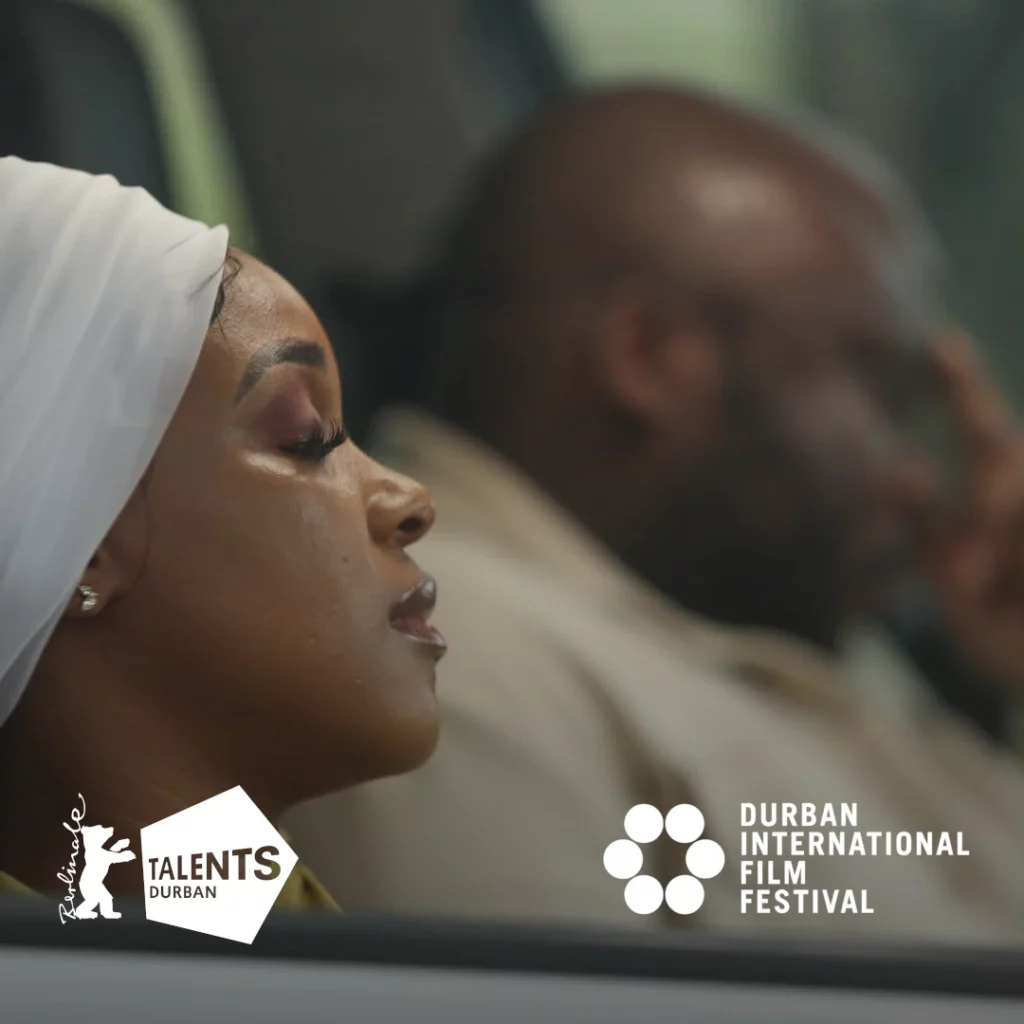
THEMBA centers on a grieving couple, Themba (Ntando Mncube) and Nokuthula (Mbalenhle Mavimbela), as they navigate life after the loss of their son, Nzamo (Sbani Mbongwa). Life after loss is dispiriting for the couple, but for Nokuthula, she has to deal with both the loss of her son, and her husband’s newfound irritability. Long after their son’s funeral the couple continue to struggle in their marriage. Themba’s reluctance to share, in detail, how their son died, his desperation to erase memories of their son, and his refusal to grieve together continues to hurt both their healing and marriage.
Momentarily, the film flirts with the conventions of the crime thriller, luring viewers to suspect that Themba murdered his son. His evasiveness about the details of his son’s death, recurring nightmares, including one in which he screams, “I didn’t kill him,” Nokuthula’s sister suggests that they hire a private investigator, all of this fuels a growing suspicion in Nokuthula. In one scene where Nokuthula invites his aunt (Phumzile Lukhozi) over. His aunt’s recollection that both Nzamo and Banele were five at the time of their death reinforces the devastating scale of loss for Themba; However for Nokuthula, it heightens her suspicion of her husband.
Though the film intermittently returns to flashbacks of Themba as a child alongside another child, it is only in the closing moments, through an intimate confession between the couples, that it reveals the child to be his younger brother, Banele, who drowned in the river below a waterfall. This withholding of both the cause of their son’s death and Banele’s identity, utilizes narrative absence as a formal principle embodying a psychological condition, making the viewer experience loss as something that is only apprehended belatedly.
The film also explores themes of masculinity through Themba’s feeling of inadequacy and his sustained refusal to openly express his pain. In a flashback, where the couple discuss having children, Themba articulates anxiety over his unborn child not liking him; this anxiety is anchored in fear of tentative inadequacy: that his child may like the things he is not good at—like sports and origami. “Maybe your father was right. Maybe I’m not man enough for you,” he says. Themba is caught in the conception of masculinity as inherently stoic, inhibiting his emotional expression, and leaving him resentful. In one scene, he insists, “I am a man, I’ll deal with this the way I want to,” as though to reassert a masculinity endlessly slipping beyond his grasp. The film challenges this conventional conception of masculinity when Themba confides in Nokuthula and accepts help.
Mdunyiswa Mlotshwa’s camera wanders with quiet attentiveness, as if in quest of truth. The truth revealed in Ntando Mncube’s sublime embodiment of a masculine subjectivity undone by grief and the perceived failure of its protective imperative; the lie in its manning up, in the performance of stoicism to save what remains of its masculinity. The truth in Mbalenhle Mavimbela’s embodiment of vulnerability as its redeeming antithesis. The truth disclosed in their faces, where grief, loss, and eventually, redemption becomes tangible.
Despite its modest 63-minute runtime, THEMBA remains a sustained meditation on loss, an interrogation of harmful traditional conceptions of masculinity, and a contained portrayal of the transformative power of expression.
This review emanates from the Talent Press programme, an initiative of Talents Durban in collaboration with the Durban FilmMart Institute and FIPRESCI. The opinions expressed in this article are those of the author (Elijah Oluwanisola) and cannot be considered as constituting an official position of the organisers.