
Speaking for groups disadvantaged by systems of social stratification—protesting, chanting anti-apartheid slogans, singing choruses of solidarity—is commendable. Taking sustained responsibility for those communities, however, is a far rarer undertaking. It is this distinction that Eldon Van Asewegen’s FOSTA explores.
Filmed over thirteen years, the documentary uses Thulani “Fosta” Headman’s remarkable journey from prison inmate to internationally recognised DJ as the narrative spine for a broader argument: communities are not best transformed by exceptional individuals, but by sharing and continuity: a deliberate transfer of knowledge across. Mentorship, here, is an act of cultural continuity, ensuring that Langa’s musical scenes remain.
Fosta’s father introduced him to a musical inheritance of the Ngcukana music dynasty. While incarceration breaks that connection, Prison Broadcasting Network founder Marius Bowden reconnects Fosta to it by giving him access to production equipment. Fosta’s determination to transform his life is evident then as he volunteers to be a studio cleaner simply to remain close to the equipment.
The documentary’s understanding of freedom comes alive in DJ Ready D’s assertion that “you can’t be free if you’re uneducated, and you don’t understand the concept of freedom…” This idea—that freedom is inseparable from knowledge—becomes the documentary’s central thesis, and the Fosta’s indefatigable effort to bridge the knowledge gap in his community is emphasized.
On leaving prison, music becomes Fosta’s philosophy for reinvention: “Coming out,” Fosta recalls, “I had a point to prove to myself that I could use music in order to change my life”; a way of being: “I eat, I sleep, I drink music,” he declares in footage shot a decade apart. The documentary avoids the sensationalism common to similar narratives, and resists the temptation to present Fosta’s transformation as a miraculous redemption. Instead, it shows change as the result of people investing—time, trust, knowledge—in each other. Fosta succeeds because someone believed in his capacity to change, and he in turn extends that belief to his community—Here is where the documentary’s most compelling moments lie.
Fosta’s commitment to mentorship is most evident in his relationship with aspiring teenage producer Siphe Fassie. Fosta is not only interested in teaching Siphe music, he is as invested in shaping a responsible young man capable of contributing positively to his community. He notes that “spending time with Siphe wasn’t just about teaching him music, it was about life.”
Their interactions are marked by warmth and mutual respect: Fosta recalls occasions when Siphe challenged his own opinions on music, describing the teenager as an inspiration in return; by a reciprocity that transcends conventional ideas of mentorship. Siphe is not just a receiver of knowledge, he is someone whose curiosity and honesty has served as inspiration to Fosta himself.
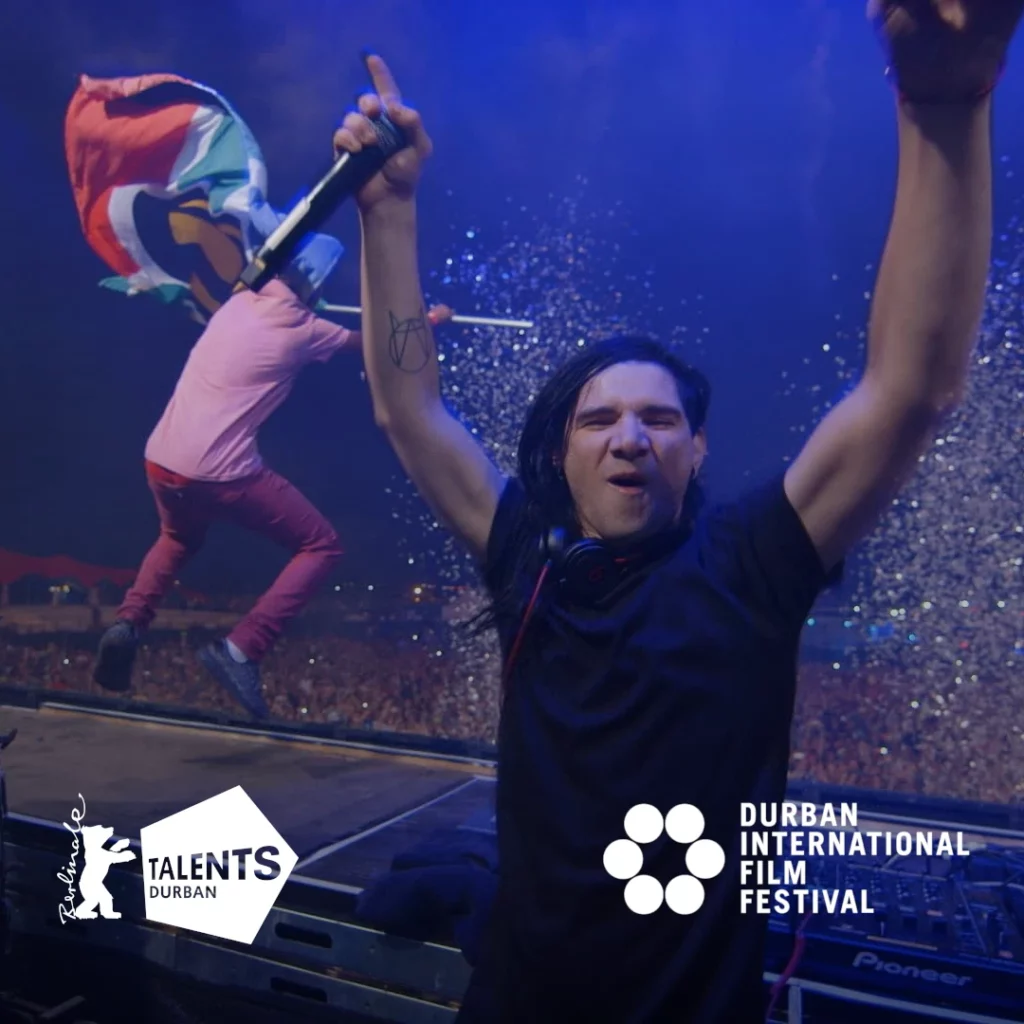
Bridges for Music occupies a central place in Fosta’s journey. The non-profit connects Langa’s music scene with artists and audiences across the world, bringing figures such as Skrillex, Richie Hawtin and Luciano into the township while connecting local artists to global opportunities. Interestingly, these exchanges are never presented as one-sided acts of charity. As founder Valentino Barrioseta explains, “The bridge needs to be built both ways.”
Fosta nevertheless recognises the limits of temporary interventions. He dismisses one-off workshops, arguing that meaningful change requires sustained presence rather than occasional engagement. “If you want to play a role in someone’s life,” he says, “you actually have to be in touch with those people.” That conviction eventually culminates in Bridges for Music Academy, a home for music education in Langa. As Fosta proudly declares, “I live up to my name every day.” A slang that means “to force things to happen.” The academy gives answers to one of his many reflections: “A lot of information stays with the older generation. How do you pass that knowledge on time?”
One aspect that may feel underexplored is the broader political landscape surrounding Fosta’s work. Allusions are made to apartheid’s legacy, spatial inequality and the structural conditions that continually shape Langa and other parts of the Cape Flats, but these are seldom examined in depth. Asewegen commits to a humanist perspective, prioritizing intimate stories of sustained responsibility in the face of marginalization. This commitment is reflected in the documentary’s restrained formal approach—save for its energetic music, which mirrors the creativity and musical temperament of its characters. Its austere visuals leave room for the people to be seen with little formal intervention. A deeper engagement with the structural inequalities that make initiatives like Bridges for Music necessary would have lent greater political urgency to the film. Yet this withholding of broader political inquiry is not apolitical; it leaves room for a different kind of politics: one driven by the revolutionary might of shared responsibility.
Fosta’s greatest contribution is not becoming an internationally recognised DJ but ensuring that the knowledge which transformed his own life outlives him.
This review emanates from the Talent Press programme, an initiative of Talents Durban in collaboration with the Durban FilmMart Institute and FIPRESCI. The opinions expressed in this article are those of the author (Elijah Oluwanisola) and cannot be considered as constituting an official position of the organisers.