
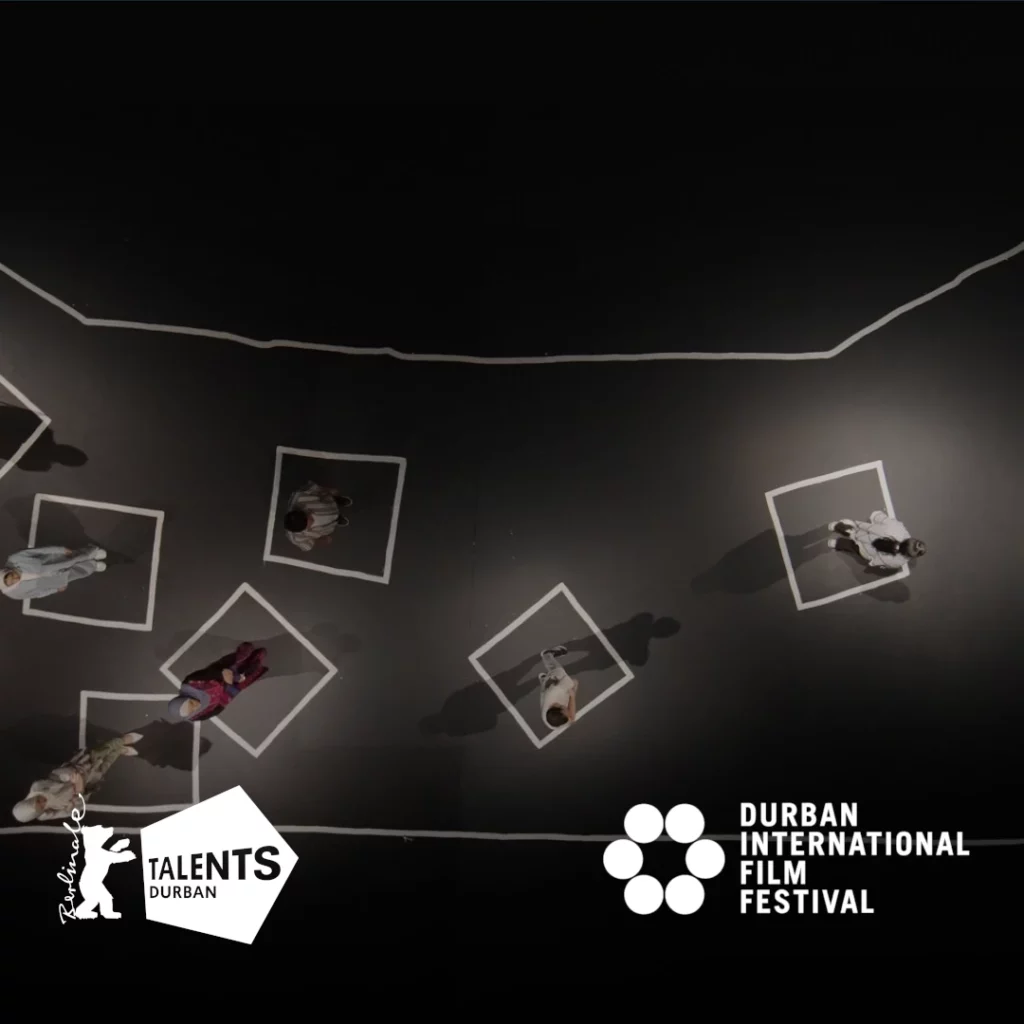
With Who is Still Alive, Swiss director Nicolas Waldimoff returns once more to stories of Palestinian dispossession. Here, Palestinians are not treated as a record of casualty for media reports or merely as evidence of the consequence of war. Waldimoff turns his camera towards them as humans, deserving of unhurried hearing.
The documentary is less interested in political rhetoric than in preserving the dignity of a people so often dehumanized. Nine Palestinian refugees recount their life before the war, speaking of their families and friends, loss and death—an act of witness that, in itself, is political; an insistence on humanity.
Thirteen relatives, including a niece whose internal organs burst inside her; four loved ones, including two siblings, one lost for days before his body is found; family members excavated one after the other from under rubbles; a truck filled with women and children, bombed right behind you; the sound of bombs going off when you call your mother. Yet, this chain of unending fatality is merely a precis of what our protagonists have had to live through.
One of the documentary’s most striking features is its refusal to use war-torn footage and photographs, which most films of its kind treat as indispensable. This subversive omission serves as an act of aesthetic defiance against hegemony, decentering dominant narratives on the Gaza war, reclaiming the people’s agency to tell their own stories. And as the testimonies unfold, what could have been flattened into yet another casualty record reveals itself as real, irredeemable loss.
Waldmoff’s mise-en-scène is unornamented—subjects are filmed against a black void—stripped of visual context that reinstates the grammar of war documentaries. This Brechtian refusal of illusion leaves nothing between the viewer and the testimony itself—we are consumed by the testimony, not distracted by needless spectacle. Like in Lars von Trier’s Dogville, the documentary is shot almost entirely on a soundstage—and just as Elm Street’s houses are outlined in chalk, the protagonists’ homes in Gaza are rendered in white paint.
Though the testimony is mostly oral, words are not the sole means of expression for the protagonists; silence, tears, sketches, are also tools of expression. Yet none of these fully measure up to their endless suffering. Many still have family back in Gaza who weren’t lucky enough to escape before the closing of the Rafah border: Hana Eleiwa is overwhelmed with the guilt of not doing more than she did to help her mother escape. She wishes she had “shouted and cried louder,” perhaps the officers may have taken pity on her.
Displaced and burdened with the laden feeling of alienation in a foreign land where they are only granted a temporary permit that does not allow them to work or access social benefits. For a teenager like Ghada Alabadla alienation materializes when the Egyptian national anthem is sung at school. “I tear up. I also have a homeland, I just can’t be there. I stay there, silent. I don’t know their anthem. I only know mine” she says.
The protagonists’ displacements extend to the film’s production itself. An opening context card reveals that the film, originally planned to be shot in Switzerland, ends up filming in South Africa—one of the few countries that accommodate Palestinians from Gaza without a visa—after the protagonists were denied entry by Swiss authority.
For Adel Altaweel, though his experiences are firsthand, his account is mostly secondhand—pieced together from what he had been told, since he remembers little from the war himself. He becomes a microcosm of the cultural erasure that threatens future generations of Palestinians. This erasure takes physical form in the destruction of a museum containing decades of cultural archive: “About 200 Palestinian robes,” Jawdat Khoudary recalls, “the most recent one being 50 or 60 years old”. And in the words Mahmoud Jouda puts it, “Gaza is gone. The Gaza that we wrote about, that we tried to preserve for future generations. They might read about it and see pictures, but they won’t walk its streets, smell its scents, build a relationship with it.”
Though our protagonists are not without a roof over their heads in Egypt, but home is beyond shelter, it is “like a member of the family… a friend, a brother, a loved one.” In one scene, we see them physically present in a residential area, but when one takes a closer look at the images with the heart, you hear the images echoing the elegiac words of Jawdat Khoudary, “the body is in one place, while the soul is elsewhere, Gaza.”
To ward off cynicism, one might turn to hope. Yet for our protagonists, hope itself is a distant longing, a lie they have to keep telling. Jawdat Khoudary who would gather young people to tell them to keep hope alive now struggles to reconcile his own teachings, for him “these days when I talk about hope, I know deep down that I’m a liar.” Yet, they are aware that the lie of hope is a necessary one. Even though a lifetime of work has been lost, hope must be held on to. “Who will rebuild Gaza?” Who will rebuild their homes?
The closing scene features a rendition of Mawtini, a poem written by Palestinian poet Ibrahim Touqan and later set to music, performed by the protagonists as an expression of hope, national identity and longing for homeland.
Our empathy may be insufficient. How much weeping is enough for a people who have seen death in every form, who have been separated from their families, who have been displaced from their homes, who are continually alienated in the world? And yet, Who is Still Alive calls on us to be witnesses to an account bereft of political agenda and media propaganda—to hear, at last, a testimony unmediated by experts and analysts from those whom war has tried to silence.
This review emanates from the Talent Press programme, an initiative of Talents Durban in collaboration with the Durban FilmMart Institute and FIPRESCI. The opinions expressed in this article are those of the author (Elijah Oluwanisola) and cannot be considered as constituting an official position of the organisers.