
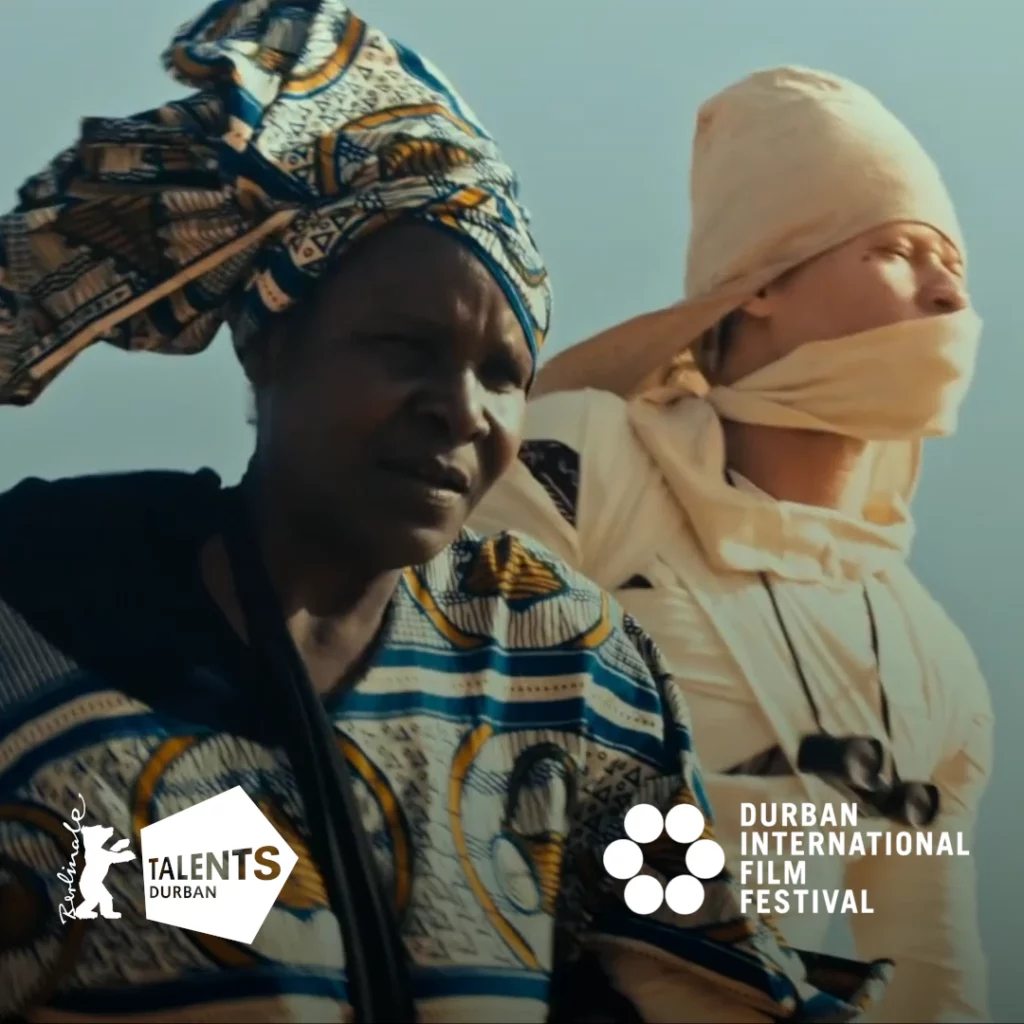
Director Azlarabe Alaoui tackles the question of what it means to search for belonging in a world that rejects you before your journey even begins. The film mentions that United Nations have proven that there have been nearly 800 attacks on vulnerable individuals with an inherited genetic condition called Albinism in 28 countries. Albino people are killed after being mutilated and their blood is used for witchcraft. Even after death their graves as desecrated to retrieve their body parts and sold for ritual purposes. We are introduced to Ousmane a young albino from Senegal who embarks on a dangerous migration journey with his mother. The film focuses on the realities faced by people with albinism in parts of Africa. They fit into the myths and superstitions that they bring bad luck when they are alive but prove to be very useful in their death. They are always seen as a threat because they fit into otherness. The thing about stereotypes; it’s not that they are untrue, it’s because they are incomplete. Ousmane faces discrimination and violence everywhere he goes. Making his decision to leave home not a choice but a necessity. The film shows that even within his village, he cannot escape fear. At night, under the cover of darkness, men are gathered around a blazing fire. Chanting and performing rituals believed to be linked to witchcraft. These haunting scenes reveal how deeply rooted superstition shapes the community’s beliefs. This creates an atmosphere where Ousmane’s albinism is seen not as a medical condition but as something feared and misunderstood. The cinematography and lighting make it clear that his home has become a place of danger rather than safety.
The film’s emotional core lies in the mother-and-son relationship. Amidst all the terrible events that have taken place, they share a very strong bond. Ousmane’s mother will do anything for her son, whom she calls her beautiful white butterfly. The director explores how motherhood is portrayed as protection, sacrifice and resilience. The screenplay highlights how the mother kills one of the sorcerors to protect her son. Family becomes the only certainty during displacement. There is a beautiful shot of migrants walking through the dry desert with excessive heat and thirst. This highlights the hardship they face to flee for safety. Cinematography puts emphasis on isolation, survival and hope. Ousmane’s life is always under threat not only from smugglers and socerous but at a geographical sense as well. The sun piercing on his pale skin and the heat that causes thirst, heat rash and sunburn. Within a bunch of migrants he meets his enemy, who constantly torments Ousman because of being an albino. The enemy is adamant on chasing Ousman out of the group of migrants and succeeds. The director makes it clear on how the vast landscape mirrors the characters emotional state.
Before Ousmane becomes a migrant, he is already an outsider. Azlarabe Alaoui’s screenplay suggests that the first border many people face is not geographical, but social. The film touches on themes that explore the sense of resilience that Ousmane has to have. He is constantly under attack and needs to survive constantly. The only family he has is his mother and that gives him a sense of hope. He experiences challenges of identity and a sense of belonging. Ousmane searches not only for safety but for recognition of his humanity. Azlarabe Alaoui’s storytelling approach is filled with slow pacing and quiet moments of emotional tension filled with symbolism to reveal the psychological weight carried by his characters. The cinematography lingers in intimate close-ups of Ousmane and his mother capturing their silent exchanges reinforcing the unbreakable bond that sustains them throughout their journey. These moments are contrasted with expansive wide shots of the desert and unfamiliar landscapes, emphasizing both their physical vulnerability and emotional isolation.
This tension becomes poignant when they arrive at the Zaouia pilgrimage, a sanctuary they believe will offer refuge after the dangers of the desert. Ousmanes mother, whose late husband was respected Sheikh within the spiritual community and expects to find comfort and belonging. Instead she is informed that men and women must sleep in separate quarters. This devastates her because she believes her son would not survive without her. Ousmane has spent his life depending on her protection from violence and discrimination he faces as a person with albinism. A place that was supposed to represent safety and comfort is not. A place of spiritual sanctuary illustrates another site of anxiety that safety remains elusive even within spaces built on faith and community. This is a reflection on how the screenplay balances intimate family drama with larger political issues.
By the ending, the film asks the audience to reconsider how society treats those deemed different. The day Ousmane was born he was already deemed as an outsider. It reminds us that migration begins long before a border is crossed. The screenplay argues that prejudice can be just as dangerous as the desert itself. It leaves the audience questioning whether humanity is defined by nationality, appearance or our capacity for empathy.
This review emanates from the Talent Press programme, an initiative of Talents Durban in collaboration with the Durban FilmMart Institute and FIPRESCI. The opinions expressed in this article are those of the author (Hlumela Luvuno) and cannot be considered as constituting an official position of the organisers.