
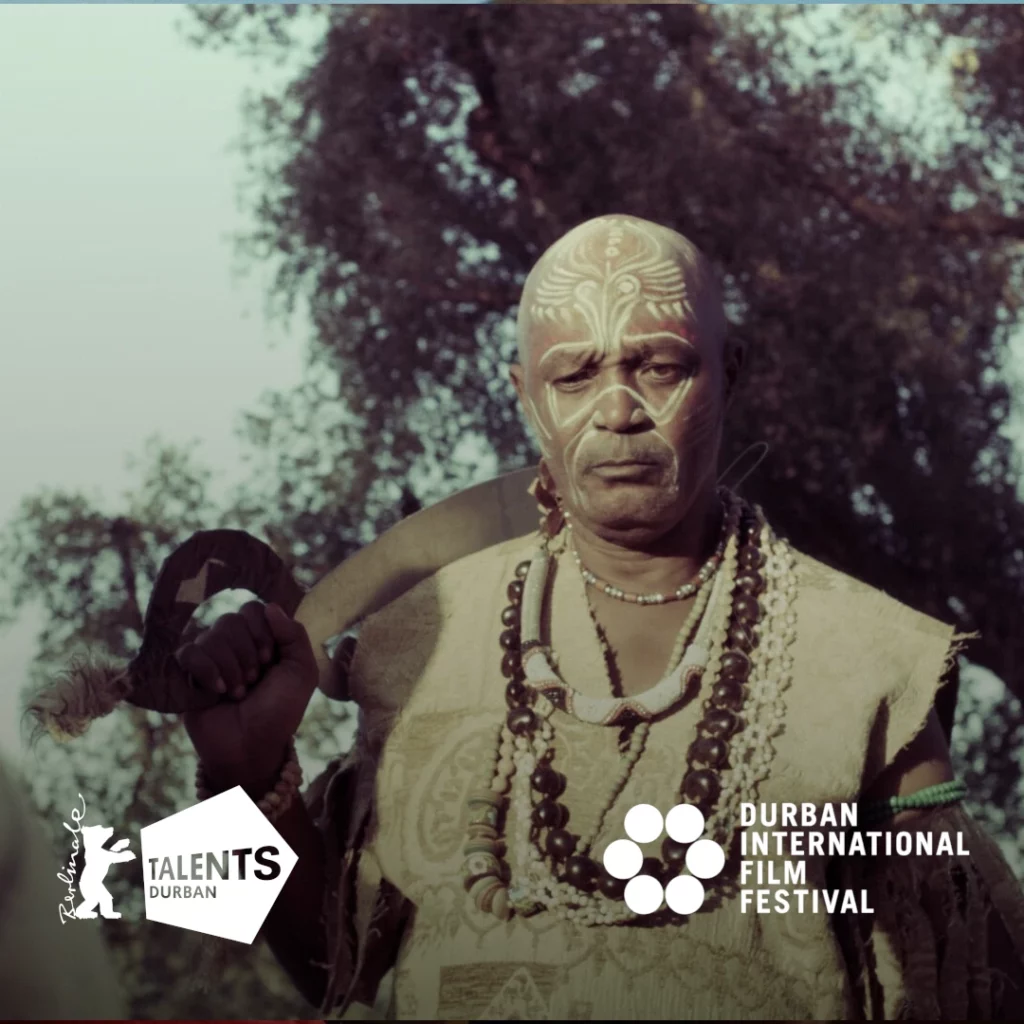
Mother and son cling on dearly to their bond as they face the ultimate journey in search of a better life.
In a remote Senegalese village, a recluse Ousmane watches from a distance as villagers engage in a ritual. He longingly wants to participate, but such exposure is a sure death sentence for him. A man spies him, and he runs back to the safety of their secluded home. His mother is vexed, reiterating the risk he has put himself in. Their fears are confirmed when his mother is warned of sorcerers trying to get hold of Ousmane. They must leave immediately. They have two options: go to an albino sanctuary in Tanzania, where Ousmane’s seclusion continues but safety is guaranteed, or smuggle their way to Europe, where he will be free to live in the open but has to make a dangerous journey across. The latter presents a more enticing opportunity for Ousmane, who jumps at the chance of living in the open, a social life he has not been able to experience because of his albinism.
Their ill-fated journey begins, and their reluctant fellowship soon abandons Ousmane and his mother to die in the vast desert. At the brink of death, they are discovered by a kind nomad, who invites them to their home, where they are able to treat their wounds and replenish for the journey ahead.
They get only very far with their samaritan and his camels when they chance upon a driver and his odd companion, Zoubir, also on their way to Morocco. Safely in Morocco, they disband when Ousmane and his mother must take refuge in a muslim brotherhood. Here they take the time to recoup their resources and get enough to buy their way into Europe. Danger seems to follow them, and they are forced to leave prematurely using the most difficult means possible. At long last, a reconnection is made through Zoubir, and a hefty price is able to buy them passage to Europe.
The Color of Exile is aptly named, describing the exiled lives of albino people in parts of Africa. This is Ousmane’s existence, living in a prison or risking being captured and mutilated for sorcery. This film is not just about running into safety but about freedom. Director Azlarabe Alaoui sticks to the script for a road movie featuring motifs of vast landscapes and wide shots of sojourners in single file. This motif works well to drive the idea of freedom expressed in the film. The great new world for Ousmane to explore out of the confines of a secluded life. For Ousmane’s mother, two people alone in a vast world emphasise her fear. It helps bring out her interiority as she clings to her son, afraid of being second away from him. All they have is each other after her husband, Ousmane’s father, was killed for the same reasons that have forced them to abandon their home.
Their journey’s progression acts as the driver for Ousmane’s growth; at the beginning,, he is a clueless young man sheltered away from realities by his mother. Further on, we watch him transform to take up more agency. There is also the internal conflict about how this progress means leaving the world that he knows behind, which unfortunately includes his mother, whose bond defines the whole film and their whole lives. Away from fiction, this is a dynamic familiar to parents and caregivers universally. The ache of having to eventually let go of a child for their progression. As a parent, one can only go so far, and sometimes such attachment can be harmful, hampering their progress. Perhaps you can love too much? Or is it guided by a selfish need to be the defining factor in a child’s life? This is, however, not to discount the sacrifices they make to provide the best outcomes for their offspring.
A theme one cannot ignore in this film is immigration. A hot topic in the global North vs South debate. The global North takes advantage of the South and then shuts it out. Meanwhile, here in Africa, there is also an influx of economic refugees from the global North hoping to get their dollar a lot further than in their home countries. Ousmane sought asylum to escape a death sentence; for others, impoverished lives may have left them no choice but to try their luck in Europe; as for Zoubir, it’s a need for a different kind of freedom tied to identity and expression. Whatever the reason, the destination is the same, with a gamble whether they’ll make it across alive or if they do, they will be turned away. The final act draws all the attention to this reality, showing the audience the impossible conditions associated with it. It also shows us what is really given up as they gamble their lives away in the hope of reaching greener pastures.
The Color of Exile is a simple story to follow with a typical linear structure. A choice that makes the film’s underlying message shine through. Supported by its visual language, the character journey is logical to the film’s central themes, particularly that of transformation and immigration. A performance that stuck with me was Naky Si Svane’s portrayal of Aichata, Oussmane’s mother. Her persistence in clinging to her son wore me down, and as the film progressed, I felt validated. While I would have hoped for a different conclusion, I did not get quite the fairy tale ending that I badly wanted after mother and son went through everything to earn their freedom. Azarael, however, gave us a different ending satisfactory in its own right and freedom in the end for our three protagonists.
This review emanates from the Talent Press programme, an initiative of Talents Durban in collaboration with the Durban FilmMart Institute and FIPRESCI. The opinions expressed in this article are those of the author (Michelle Abuti) and cannot be considered as constituting an official position of the organisers.