
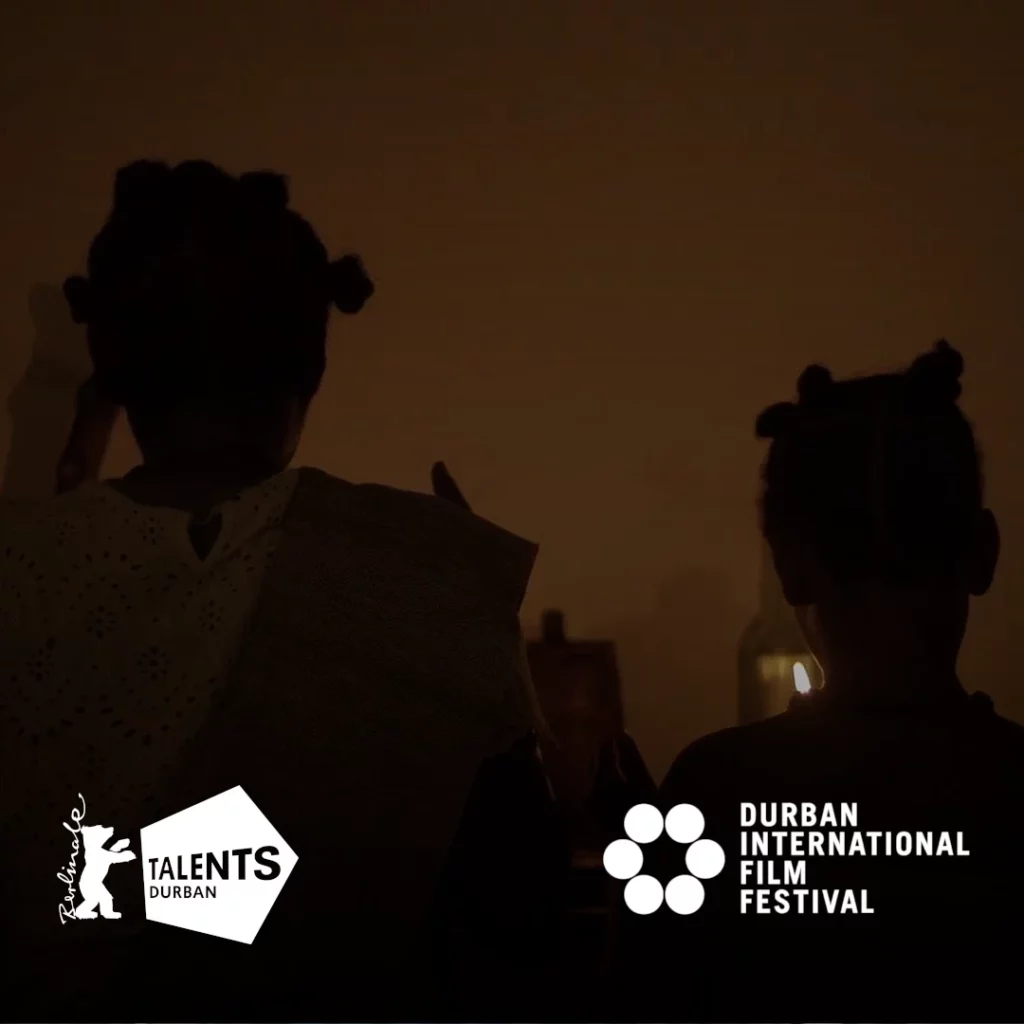
The story unfolds through a mother recounting her family’s history to her daughter; the camera pans into a candlelit room with both characters on their knees, with an opening prayer. “You, the spirits of the sea, the forest, the thorns, among you, there are traitors who have sold the land and the sea of our own ancestors. The film uses memory to warn environmental destruction that also forms part of cultural destruction. Dadabe’s father, her great-grandfather, witnessed the end of time when fish were plentiful. The camera presents a wide shot of young children running barefoot into the river, while their laughter echoes across the water as they splash one another without restraint. The camera lingers on their carefree movements, capturing the sunlight dancing across the rippling surface. Their play evokes a sense of innocence and freedom. These scenes become symbolic throughout the film. They contrast the innocence of childhood with the threat of environmental degradation, reminding viewers that when nature is lost, it is not only ecosystems that disappear but also the everyday rituals and shared experiences that define a community.
Stories can change minds and take away and restore dignity. Nantenaina Lova uses his camera to tell stories of those who resist a system, those whom we tend to belittle and whom he considers to be real-life heroes. The mother uses oral storytelling as it is a vital and a living method for preserving history and passing down cultural values and building community especially in societies without written records. This method relies on spoken words and memory that is passed down to the younger generations on what the community believes how to treat others and on how to behave. The mothers narration keeps ancestral knowledge alive.
The Malagasy fishermen and farmers are actively fighting major mineral sand and rare earth mining projects. The government is risking radioactivity and polluting the water, and the people’s ancestors’ graves are at risk of being desecrated, violating sacred ground and ruining a spiritual connection that forms their identity. As a result, grievances among local people over the mining project have led to major public protests, which resulted in a military response by the government.
The film captures powerful scenes of community resistance as local residents gather in protest, holding placards high above their heads while chanting against the mining project that has already taken place without the locals being informed of such. The director cleverly uses shots of children chanting against the mining project in Amsterdam. Showing solidarity across the world. The protests are emotionally charged. The film illustrates that the struggle is not over land but it is a fight to preserve history, culture, faith and the enduring relationship between the living the dead including the land they call home.
The Malagasy community have huge respect for the sacred trees and the sea is represented as a symbol. The director views the sea as a connection between generations that has a spiritual communication between the Malagasy community. Followed by wide shots of the oceans and the coastline. The films cinematography is instrumental in conveying its emotional and political message. Bathed in natural light, the coastline is captured with warmth and authenticity. Emphasizing the intimate relationship between the people and the land they have inhabited for generations.
The colour palette evokes earthy tones, deep ocean blues, and soft golden sunlight that create a nostalgic and highlights the fragility of a landscape under threat. The atmosphere seems sombre, mirroring the community’s growing sense of loss and displacement. The moments of stillness in the film allow the natural sounds of crashing waves, rustling wind including the distant voices to dominate the soundscape. The local people fear losing their history, identity and the stories that bind the generation together. The significant part of the film is that it is set in 2067 which means it is set in the future but rooted in the past. The film reminds audiences that climate change is not only an environmental crisis but also a cultural and spiritual one.
There is a clear tension between development and preservation of the land. One of the film’s most intimate scenes follows a group of men as they walk into the dense forest, treating the wilderness like a pharmacy. The camera pans through the towering baobab trees observing their movements with patience and respect. Rather than stripping the forest of its resources, we witness the men slowly and carefully remove small pieces of bark from selected trees. Through these quiet observational shots, the cinematography elevates the forest beyond a physical setting presenting it as a sacred space of healing knowledge and the cultural continuity. The use of natural lighting filtering through the boats creates a serene atmosphere.
The film is a powerful meditation on memory and environmental justice. The narration throughout the film between the mother and daughter highlights how the younger generation become custodians of history. Through its evocative cinematography and deeply human storytelling, the film challenges viewers to recognise that protecting the environment also means protecting the communities, traditions, and ancestral legacies that are inseparable from it.
This review emanates from the Talent Press programme, an initiative of Talents Durban in collaboration with the Durban FilmMart Institute and FIPRESCI. The opinions expressed in this article are those of the author (Hlumela Luvuno) and cannot be considered as constituting an official position of the organisers.